


Arulmigu Arunachaleswarar Temple, Tamil Nadu
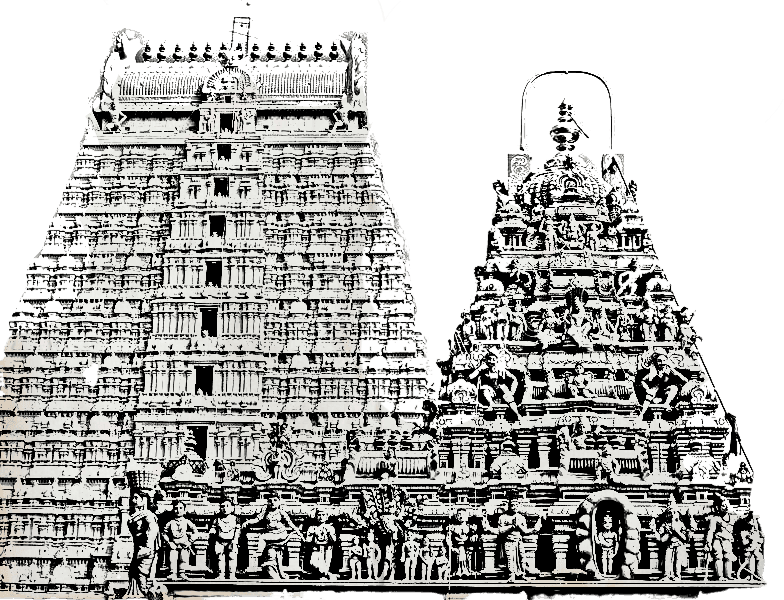
There aren't many holy places in the world built to destroy the ego of the gods themselves, but the Annamalaiyar Temple in Thiruvannamalai, Tamil Nadu, is one such rarity.
The story goes that Brahma and Vishnu were once in disagreement about who was greater between the two. So, they went to Shiva and asked him to weigh in.
In response, Shiva set them a challenge. An eternal column of fire, embodying Shiva himself, rose between them. Shiva then told Brahma and Vishnu that the god who first found the fire's beginning or end would be considered the greatest.
Vishnu turned himself into a wild boar and dug deep into the ground, while Brahma became a swan and flew to the skies.
Unable to get to the source of the fire deep in the bowels of Earth, Vishnu accepted defeat. Brahma could not find the crown but saw a kewda (ketaki, thazhambu) flower falling, which had initially been on Shiva's head. Brahma asked the flower how long it had been falling, and the flower replied 40,000 years. Realising that he would never reach Shiva's crown, Brahma asked the flower to lie and say that Brahma had reached the top of the column and had plucked the flower from it. The flower agreed.
Shiva was so angry at the lie that he cursed both Brahma and the flower, saying that Brahma would never be worshipped, and the kewda would never again be used in Shiva's worship.
Thus, the place where Shiva became a column of fire to eliminate the ego of the gods is called Thiruvannamalai. At Vishnu and Brahma's request, Shiva then took the form of a Shiva Lingam at the foot of the hill where the Annamalaiyar Temple is now located.
The temple complex is one of India's most enormous, spanning across 10 hectares. The present masonry structure was built during the Chola dynasty in the 9th Century. Later expansions are attributed to Vijayanagar rulers of the Sangama Dynasty (1336-1485 CE), the Saluva dynasty and the Tuluva dynasty (1491-1570 CE).
Sevas and pujas:
The temple has six daily rituals at various times, from 5:30 am to 10 pm.
Festivals
There are 12 festivals every year. The Karthigai Deepam festival is celebrated between November and December, during the day of the full moon. A giant beacon is lit atop the hill that can be seen from miles around and symbolises the Shiva Lingam of fire joining the sky. Three million pilgrims witness the event. In addition, devotees circumnavigate the temple base and the Annamalai Hills on the day preceding each full moon. A million pilgrims observe this ritual, which is called Girivalam.
Best time to visit: All year-round.
Did you know?
Most deities are established on top of a hill, but the hill itself is the deity (Lord Annamalaiyar) and, therefore, worshipped. "Arunam" means sun and denotes the red colour of fire. "Asalam" means "Giri" or "malai" (mountain).
This temple has many vast and rare, huge vahanas (chariots) to take deities out during festivals. The chariots are magnificent and show excellent craftsmanship. Another distinguishing feature of the temple is its silver Nandi bull. A Nandi of this size has not been seen elsewhere.
Places nearby:
Gingee Fort, Mamara Guhai, Sattanur Dam, Virupaksha Cave, Ramana Ashram, Seshadri Swamingal Ashram and Skandashramam.
share this page:
